
MMR (Measles, Mumps and Rubella)
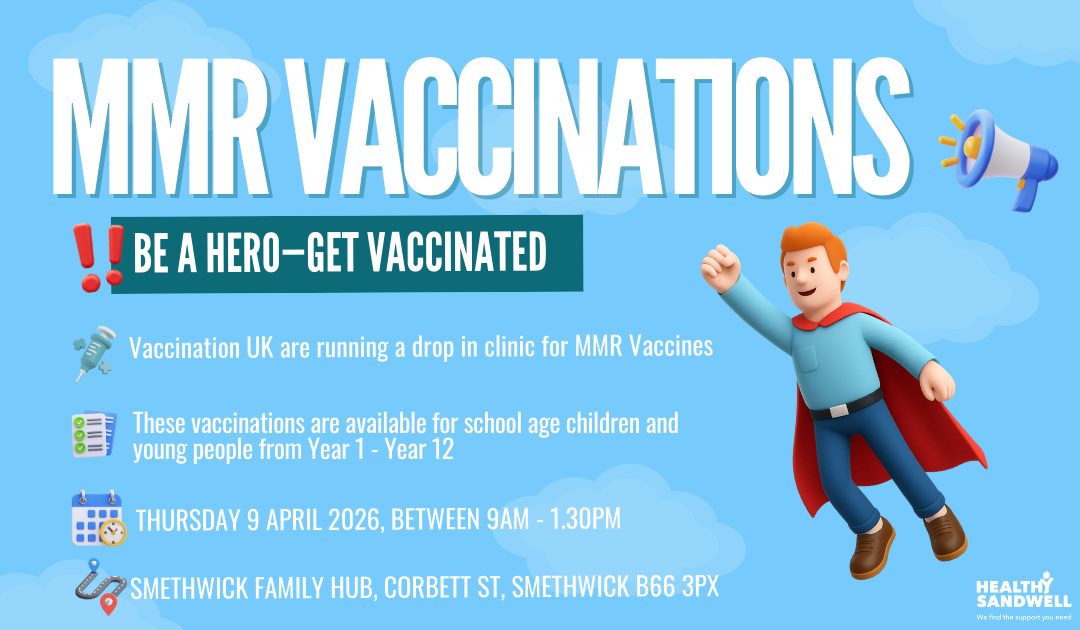
Be a hero- get vaccinated!
You need 2 doses of the MMR vaccine for lifelong protection.
If you haven’t had both doses, you could be at risk!
Call your GP practice and book an appointment to get your MMR vaccine!
MMR Vaccine Frequently Asked Questions (FAQs)
What is the MMR/MMRV Vaccine?
The MMR vaccine is a vaccine given in two doses which protects you from Measles, Mumps and Rubella. It now has been changed to include chickenpox (varicella), and is called the MMRV.
The MMRV is still available in a non-geletine version.
The MMR vaccine is still available for older children and adults born on or before 31 December 2019 who were not vaccinated against measles, mumps and rubella when they were younger. Your GP will inform you about which vaccine you will be offered.
When is the MMRV vaccine is given?
Who should have it?
When is it given?
Children born on or after 1 January 2025
1 dose given at 12 months and 1 dose given at 18 months
Children born between 1 July 2024 and 31 December 2024
1 dose given at 18 months and 1 dose given at 3 years 4 months
Children born between 1 September 2022 and 30 June 2024
1 dose given at 3 years 4 months
Children born between 1 January 2020 and 31 August 2022 who have not had chickenpox or the chickenpox vaccine
1 dose given sometime between 1 November 2026 and 31 March 2028 – your GP will contact you about this nearer the time
What is measles?
Measles is a very infectious viral illness that is spread by coughs and sneezes. If you catch measles you will probably feel very poorly and be off school or work for around 10 days.
There is no treatment or cure for measles. Symptoms of measles include fever, sore red eyes, and rash. It can be a very serious infection for some people.
What is mumps?
Mumps is a viral illness that is spread by coughs and sneezes. It is also spread through close contact with someone who already has the infection.
Symptoms of mumps usually last around two weeks. They can include a headache and a fever but the most common symptom is swelling of the glands at the side of the face.
There is currently no medication to cure mumps. Most cases of mumps now occur in young adults who haven’t had two doses of MMR vaccine.
What is rubella?
Rubella is a viral illness that is now rare in the UK thanks to the success of the MMR vaccine. It is spread in a similar way to mumps and measles.
Symptoms of rubella include a rash, cold-like symptoms, and aching joints. For most people, it is usually a mild condition that gets better in 7 to 10 days without treatment. However, if pregnant women develop rubella it can be very serious for their unborn baby.
What is varicella?
Varicella, commonly known as chickenpox, is a highly contagious, acute infectious disease caused by the varicella-zoster virus (VZV).
Although chickenpox is usually mild in children, it can lead to serious issues like pneumonia, encephalitis, and skin infections.
After 2 doses, the chickenpox vaccine provides around 98% protection in children.
How does the MMR vaccine work?
Two doses are given by injection into the leg or upper arm. Your immune system will produce cells which recognise and the three diseases. This means if you are in contact with these diseases in the future, these cells will wake up and produce antibodies.
How long does the vaccine last?
The MMR vaccine gives long lasting protection with just two doses of the vaccine.
The MMR vaccine is the safest and most effective way to protect yourself against measles, mumps and rubella. Since the vaccine was introduced in 1988, these conditions have become rare in the UK. If you are unsure whether you have already had the vaccine or not, you can check with your GP.
Who should have the vaccine?
All children over the age of one year should have two doses of the vaccine. The first dose is usually given at one year of age. The second dose is now given at 18 months old.
Older children and adults should have two doses of the vaccine with a one month gap between them.
Pregnant women should make sure that they are protected before they become pregnant. Or, they should make sure they are vaccinated soon after the baby is born.
How safe is the vaccine?
Before vaccines can be used, they have to be thoroughly tested for safety. Although there may be some side effects from vaccination, they are usually mild and much less severe than the disease itself. Serious reactions following vaccination are rare.
Many studies have taken place to look at the safety and effectiveness of MMR vaccine. The evidence is clear that there is no link between MMR vaccine and autism.
What are the side effects of the vaccine?
Not everyone gets side effects from the vaccine.
Some people may get a rash that looks like a mild form of measles, the face may swell to look like mumps or they may have pains in the joints like rubella. These side effects occur in a small percentage of people after the first dose.
The side effects from the measles part of the vaccine are usually seen when the vaccine starts to work. This is around 6 –10 days after vaccination. Swelling of the face or joint pains tend to come on around two to three weeks after vaccination when the mumps and rubella vaccines start to work.
Side effects such as a rash or neck swelling only last for around 2–3 days and are not infectious. This means that if you do develop these side effects, you cannot pass on the infection to others. On rare occasions, a reddish-purple rash that looks like tiny bruises can occur up to six weeks following vaccination.
Why should I or my children have the vaccine?
You should have the vaccine to protect yourself against three serious infections. By doing so you will also help to protect others who can’t have the vaccine. These include unborn babies, infants who are too young to have the vaccine and those with weakened immune systems.
You should also have the vaccine if you work with young children or care for people as part of your work. Passing it on can have serious consequences for people’s health if they cannot have the vaccine.
As a precaution, women should avoid getting pregnant for one month after MMR vaccination.
Does the MMR vaccine contain gelatine?
In the UK, we have two MMR vaccines which work very well. One of them contains gelatine derived from pigs and the other one doesn’t. If you would prefer to have the vaccine that does not contain gelatine, talk to your practice nurse or GP.
Is there anyone who should not have the MMR vaccine?
The MMR should not be given to pregnant women or people who are severely immunosuppressed.
If you are unsure discuss this with your doctor.
If you have had a confirmed allergic reaction to neomycin you should not have the vaccine. If you have had a confirmed anaphylactic reaction to gelatine you should speak to your GP and arrange to have the gelatine-free vaccine.
Egg allergy
All those who are allergic to eggs, including children with asthma, can have the MMR vaccine at their GP Surgery. Anyone who has had a documented anaphylactic reaction to MMR vaccine itself should be assessed by an allergist.
Where can I get the vaccine?
All children aged one year to three years four months should be offered the vaccine as part of their routine vaccinations at their GP surgery.
Older children and adults should contact their GP practice if they have had one or no doses of the vaccine.
Pregnant women can have the vaccine at their GP surgery after their baby is born if they don’t have two documented doses.