
Do you own a wood-burning stove, or are you thinking of buying one?
Wood-burning stoves and solid fuels have become increasingly popular in recent years. However, burning wood and other solid fuels releases fine particle pollution (PM2.5), which can affect both our health and the environment.
Sandwell has introduced a Smoke Control Area to help cut the amount of harmful pollution being released into the air we all need to breathe.
Thinking of buying a wood burner? Consider the impacts before you do.
Wood smoke contains tiny particles that can have a serious impact on health. Before you buy a wood burning stove take some time to understand the health effects and legal requirements associated with owning and using one.
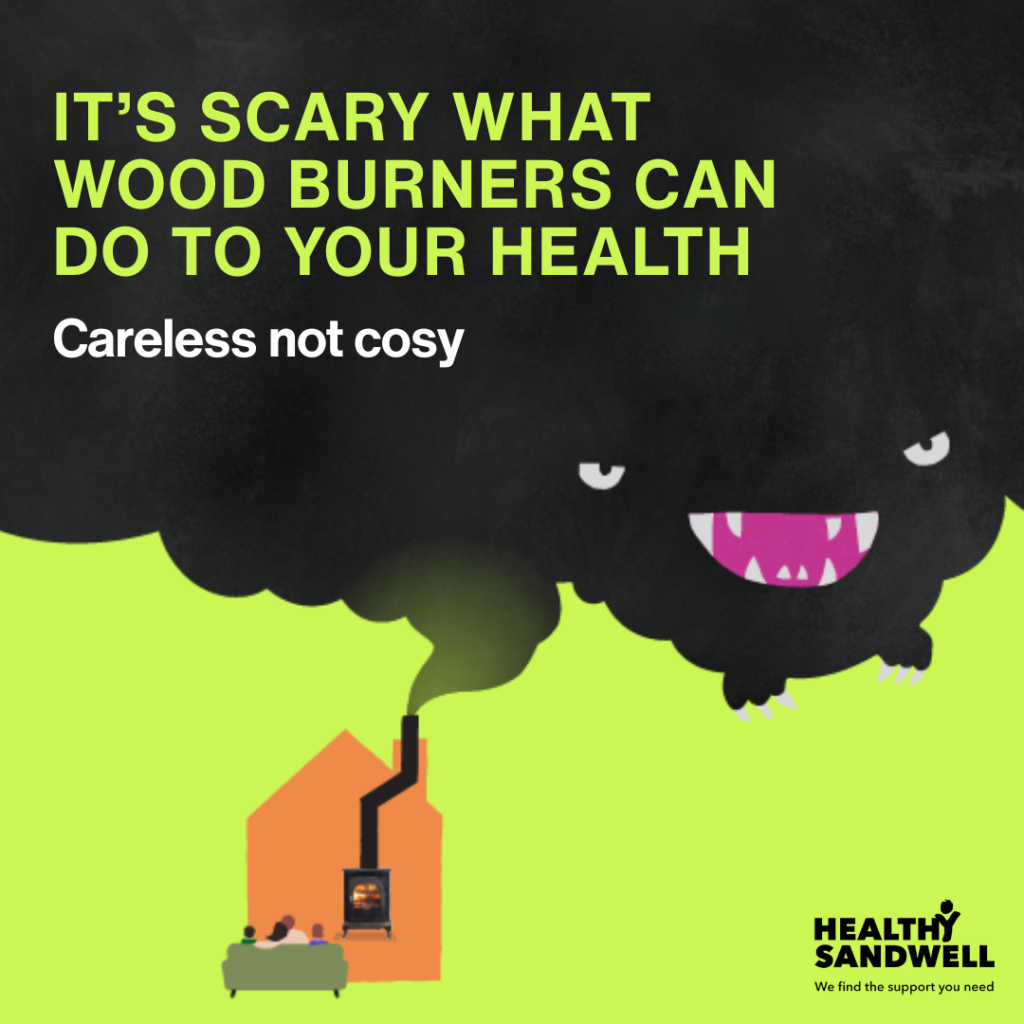
Smoke from wood burning contains many of the same dangerous chemicals found in cigarette smoke.
A single wood burner can release huge amounts of pollution which affects everyone – not only those in your household, but also your neighbours too.
Breathing polluted air increases the risk of:
- Pneumonia
- COPD
- Lung cancer
- Heart disease and heart attacks
- Stroke
- Premature death in people with lung or heart disease
- Aggravated asthma
What are the rules in Sandwell’s Smoke Control Area?
In Sandwell, you are not allowed to:
- emit visible smoke from a chimney, including moored vessels such as canal boats
- burn solid fuel, such as wood and coal, that is not authorised, unless it is to be used in a Defra exempt appliance.
When used correctly, exempted appliances should not emit visible smoke, but even Defra exempt appliances can emit high levels of PM2.5 pollution.
Do you really need to burn?
Wood burners are often marketed as cosy, cheap and eco-friendly. But the reality is very different:
It costs more – wood is usually more expensive than modern gas or electric heating.
It harms your health – indoor fires are now the UK’s biggest source of harmful fine particle pollution.
It harms the planet – wood burning creates more carbon monoxide than oil or gas, and trees can’t be replaced fast enough to offset what is burned.
For cleaner air, lower bills and a healthier home, electric or gas heating is the better choice.
Don’t assume any wood or solid fuel is suitable – it may be illegal to burn.
If you already have a log burner, there are ways to reduce risks and pollution as much as possible:
1.
Fit a carbon monoxide alarm.
2.
Get your log burner installed and serviced by a registered professional.
3.
Follow the manufacturer’s instructions.
4.
Have your chimney swept at least once a year.
5.
You can only burn wood if you are using a Defra-exempt, EcoDesign or ClearSkies certified stove.
6.
Manufactured Solid Fuels (MSF) with the ‘Ready to Burn’ logo are certified authorised fuels, so they can be burned in Sandwell. But the fuel must still be stored in a dry place to keep moisture levels below 20%.
7.
Keep fuel stored somewhere dry.
Important Advice
Don’t burn treated, wet or painted wood (like pallets or fence panels).
Don’t use wood in a non-exempt appliance.
Don’t slumber your wood burner overnight – this increases pollution and soot build-up.
Don’t ignore warning signs like smells, smoke backflow or slow-burning fires.
Don’t burn old pallets, furniture or scrap wood as it may contain contaminants that can be harmful to your health and the environment.
What happens if you break the rules?
If you burn the wrong fuel or produce visible smoke, you could receive a fixed penalty of up to £300 under the Clean Air Act 1993.